
Almost every day, I see nuggets of advice like this one. (By the way, this one is good). The thesis: provide relevant advice to those who want to be product managers and let them apply that knowledge to their role as a PM. By reading the quotes here, I’ll know what to do …

Here are some of my favorite quotes on what it means to be a Product Manager:
Yet when you actually enter a role as a PM, the transition may be more abrupt. Quotes may be hard to apply to real-life situations, product management advice may be confusing, and you may look like this.

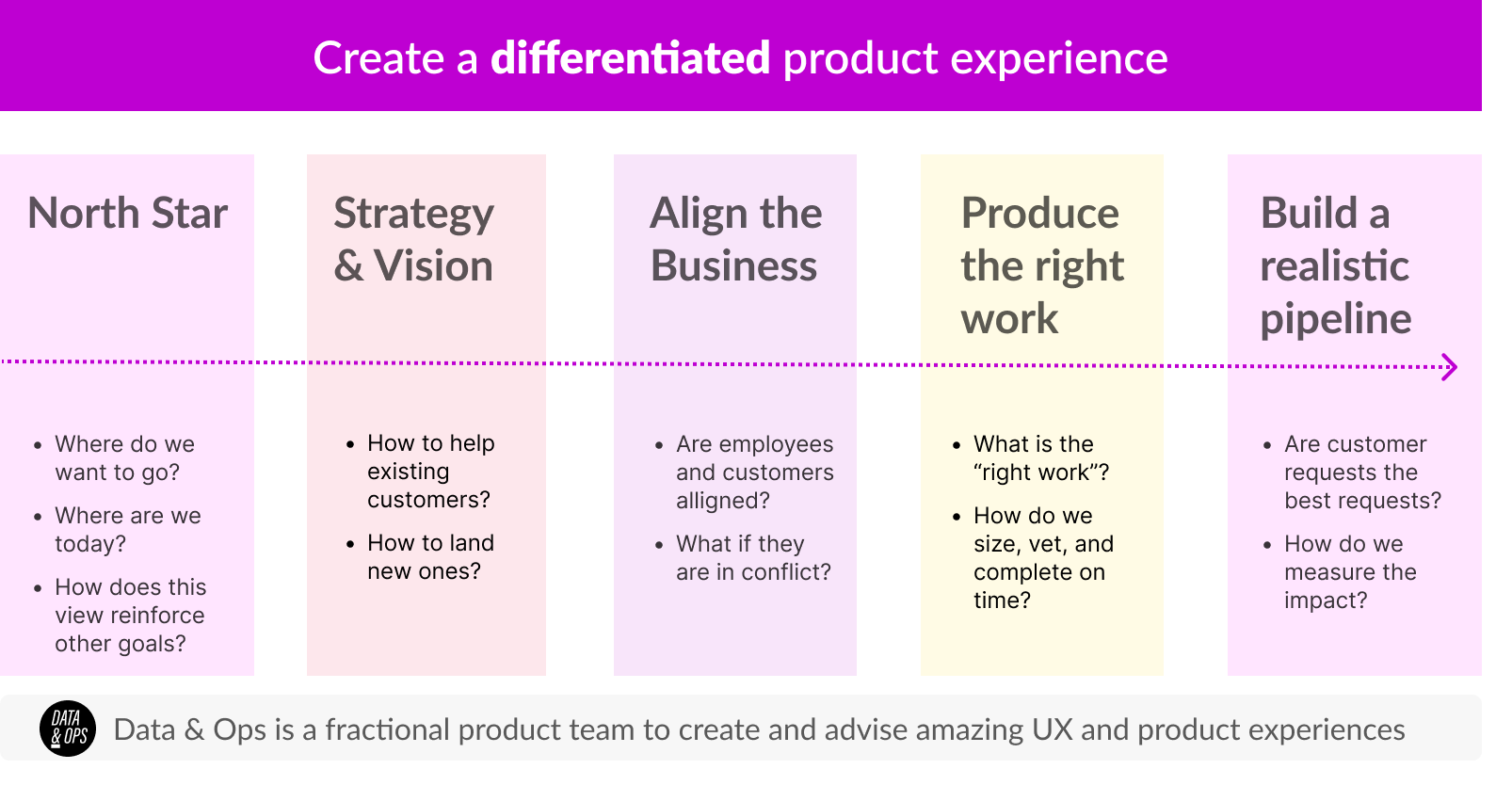
Creating a differentiated product experience is a process. That means that it’s a series of feedback loops that you are going to customize for each organization you’re in, and is not a one-size-fits-all kind of situation.
That being said, I’ve found a few techniques for orienting myself in new and existing organizations alike that help to deliver great products. These strategies also work outside of the product organization any time you want to holistically examine a project. If you answer these questions, you’ll be able to pitch for investment.
A few pillars to consider
It helps to have a rubric (no, there’s no fancy anagram here) to ground what we’re talking about when we discuss the process of making a product.
To make it simpler, let’s group our advice into five pillars of product that can create a differentiated product experience.
Here they are:
-
Creating a North Star – What’s the key thing we point to when we need to orient our work? If no one tells us what to do, can we stay aligned?
-
Maintaining Strategy and Vision – Vision tells us where we’d like to go, but not how to get there. The strategy makes the vision concrete and informs us of needed tactics.
-
Aligning the business – The people doing the work don’t always agree. How do we get them moving and thinking in similar directions, or defuse conflict?
-
Producing the right work – You can do lots of the wrong work in the right sprint order. How do we know if we’re doing something meaningful with the product?
-
Contributing to pipeline – The end goal of the product is to produce a pipeline along with the GTM organization. Are we helping to expand customers?
Creating a “North Star”
The first pillar in the product process is the creation of a North Star – a waypoint for the team to use in navigation – and needs to sum up the entire business in a single statement. The North Star is an inspirational point to align the team to the ultimate product goal. If all other things were successful, what would we achieve? How can you express the customer’s desire and the market outcome in one phrase?
If you were creating a customer relationship management system, your north star might be “to enable simple and powerful relationships with customers even when they don’t use our software.” The specific wording is going to depend upon your mission and vision. The north star tells us where we want to go, and by extension also where we are to do.
Use the product North Star to test whether a feature is worth doing or an initiative makes sense to start. If you can’t draw a line from the current product work to your North Star, go back to the drawing board.
More on creating a North Star metric
Maintaining Strategy & Vision
The second pillar in our differentiated product experience is the goal to maintain strategy and vision in the product work that we do. Vision informs the ultimate goal and helps us to know where we are going while using the North Star as a guide. Strategy is the process of aligning our tactics to produce outcomes that align with the vision.
Another way to think about this pillar is to imagine the role of the product organization as the literal application of the strategy and vision of the go-to-market push for the idea of the company.
In practical terms, we are thinking about building a product that helps existing customers expand their usage while not blocking the acquisition of new customers. If we use jargon and make concepts hard to understand, it will make product adoption suffer too.
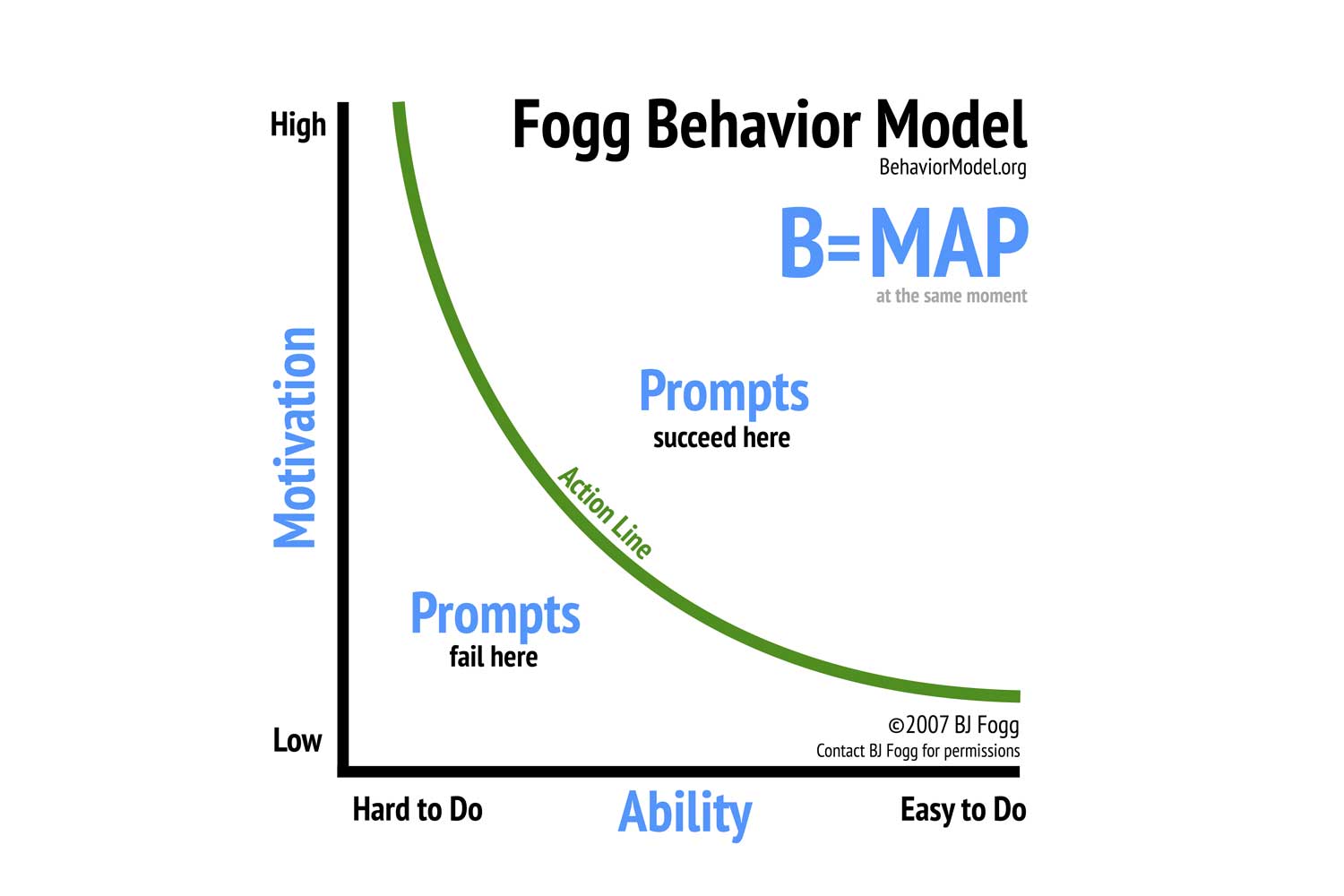
Stanford Professor BJ Fogg captures this impasse by pointing out that new feature adoption is a hybrid of motivation and ability. New users, for example, may have high motivation and low ability. Experienced users may be jaded and have less motivation but the tasks are now easy for them.
In either case, if the individual product task requires too much motivation or too much ability for the median user, it guarantees failure. You can certainly segment features or utilize techniques like information hiding to progressively reveal harder tasks, but the core remains: don’t make it hard for the customer.
Aligning the business
The third pillar of differentiated product experience is not necessarily directly related to the product work itself, but rather to the people, process, and tools involved. Are customers, stakeholders, and employees aligned on the solution to the problem?
If they all understand the North Star, are working to make things easier and more productive for customers, and understand the desired output, there’s a chance to make a great product.
But what if the teams are siloed? If no one is exactly sure what to build? And if the resources are not well allocated among teams? Then one of the roles of the Product Manager is to surface team disagreement. If people don’t know what the priorities of the team are without a manager around, the production process might be faltering.
Producing the right work
When the business is aligned and we know what we could and should be working on, how do we determine the right work to do right now? This is one of the trickiest tasks of delivering a differentiated product experience. We could literally be doing great work, at the right time, and it might not be the right work to be doing right now.
What is the “right work”? My definition of the right work is a limited set of initiatives at any one time that goes through the evaluation and design process with input from all stakeholders.
And then there’s one more thing. We have to know what the “right work” is supposed to accomplish so that we can measure it, communicate it to our peers on the GTM team, and explain it to the market.
The right work needs to have clear value to the prospect or the customer. Without that assurance, you need to find more right work to do.
There are lots of ways to get to this point, and suffice it to say you need a repeatable process to intake, evaluate, design, develop, QA, and launch beautiful features. It also means that you can only work on certain things at a time.
OODA loops are a great way to reorient the product process
Contributing to pipeline
The final pillar of creating a differentiated product experience is to build a product that people want to buy. Sounds silly, right? Why would you have to point out that customer demand is ultimately the thing that powers the product process, creating a flywheel that delivers value to customers?
Because customer requests are eventually going to drive this thing, and you’re going to have to decide whether the customer requests are in line with the strategy and vision that you have. You’ll also have to decide which of these requests will unlock new business.
Measuring tangible impact is a key goal for the product team, so if you can point to the pipeline that you generated with a feature or customers that bought specifically to access a feature, that’s fantastic! Most of the time the impact is more subtle, and that’s where the magic emerges.
Great product managers harness customer demand, facilitate conflict, and align the right work to be done that harmonizes with the strategy and vision of the business.
What’s the takeaway? Building a great product isn’t easy, and there are strategies you can use to improve your success rate by keeping the levers of the business aligned with your production process. By keeping stakeholders aligned and customers happy (at least some of the time), you’ll gain time. Focusing on a limited amount of the right work will raise your chances to build amazing stuff.