Hi, I’m Greg 👋! I’ve written 100 essays on product, data, and process where I noodle on an idea or a future product direction, often data that exists between systems.
Iconic brands are easy to understand with very little information. A curved arc. An apple. A few letters in an acronym. A logotype with a smile.
You probably guessed that I might have been referring to Nike, Apple, IBM, and Amazon without having to see that information spelled out. The power of brand is the ability to elicit an emotional response related to the business with a single image, idea, or meme. It’s an incredibly powerful asset that drives future spending, customer sentiment, and the meaning of an idea. Brand is the original meme.
Three of the four brands above are software companies. These companies have spent billions of dollars promoting the idea of their brand so that you (as a consumer of that brand) are aware of it, consider that brand, and potentially choose it for your next purchase. It’s likely that you don’t have that much to spend, so let’s talk about the key things they try to reinforce using all that money.
What makes a memorable B2B brand?
Brands that stick have instant meaning – you know what promise they deliver. FedEx made its name by delivering packages overnight when the alternative was to wait several days. Staples promised “The Easy Button” to make office supply purchasing more effective in one place. BlackBerry made getting mobile email possible. Microsoft delivered office productivity software in one place. Google made search possible for the Internet. Salesforce promised software without legacy software in a data center. And Amazon allowed us to purchase anything online.
These are large, transformative ideas. They require sweeping amounts of capital and sustained execution from hundreds or thousands or tens of thousands of people over a period of years. And they also need to be pointed at the right problem, or the story of the brand needs to be shaped so it looks like they were always pointed at that problem.
The brand experience in software or service needs to reinforce that idea or else the brand is pretty hollow. When BlackBerry’s capabilities were eclipsed by the iPhone, the brand crumbled quickly. Yet Microsoft is not the only office productivity software in the cloud and remains a strong brand even among competitors. Brand + experience must be congruent.
Why are there so few memorable B2B brands?
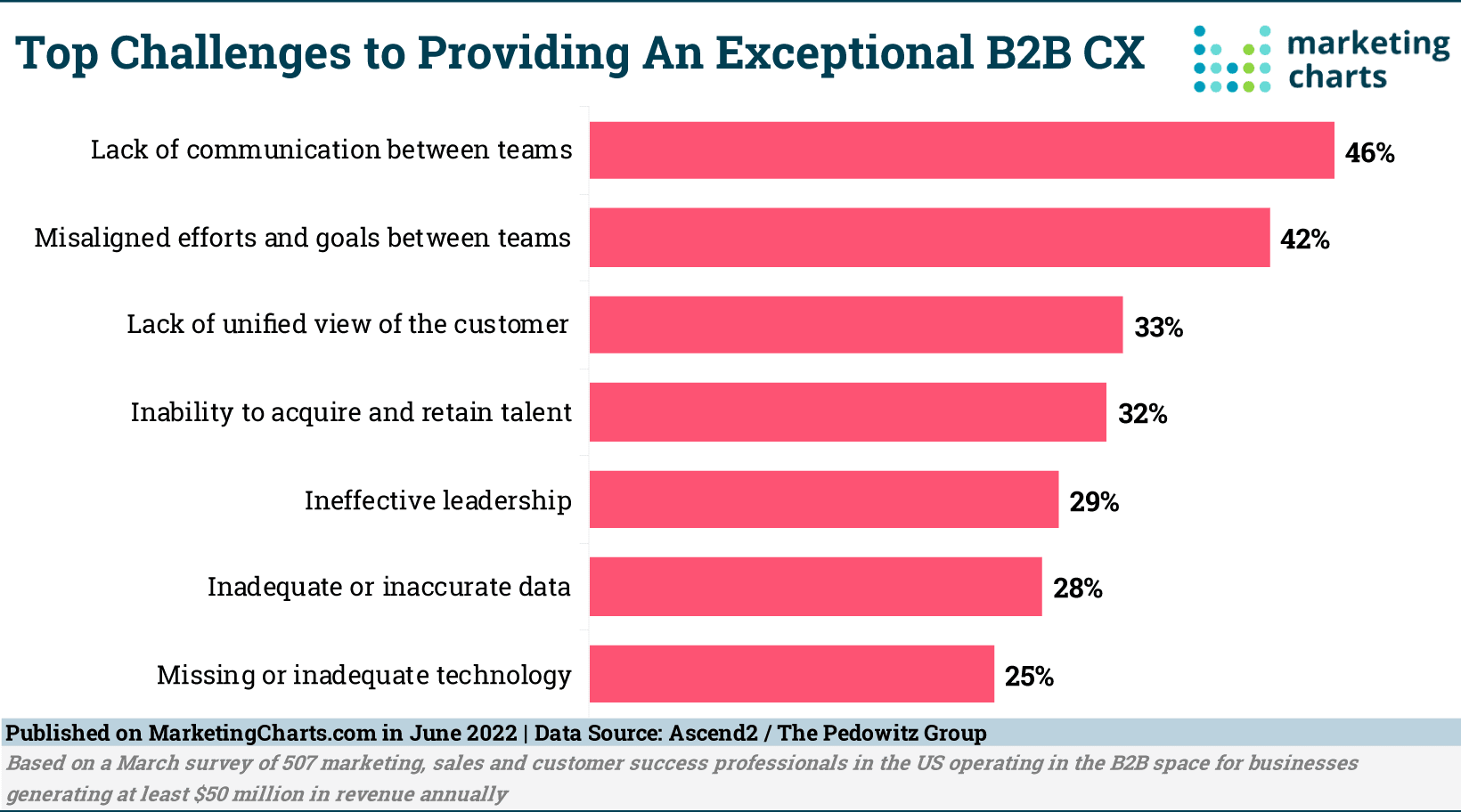
The chart above suggests some reasons that leaders in B2B brands have trouble maintaining a congruent experience with their slogans based on their customer experiences.
-
Teams are not talking (there is not enough focus on the voice of the customer)
-
Effort and goals are not aligned (goals may be created without adequate understanding of the impact on the customer)
-
They lack a unified view of the customer (throughout the business, the view of the customer is not consistent).
If this is what the marketers and CX teams at brands today say about their customer experience, it should give us a template to explain why some brands do better.
Exceptional brands:
-
Set an overarching goal for their customers (a few examples of companies doing this right today: Stripe wants to make it easy for anyone to transact online; Twilio enables customer engagement; Okta secures any platform; Redis builds the fastest database; Airtable lets you put any app into a spreadsheet.)
-
Demonstrate the path for prospects and customers to get to the result (Trailhead teaches you Salesforce; MongoDB has a free university) while also providing a pain-free way to achieve the result.
-
Build a community of practitioners and brands to prove that adopting their software or service is a trusted choice.
-
Continue to improve their software or service while constantly removing the parts of their offering that don’t make sense anymore.
Success for these brands is not a guarantee, but they give themselves and their customers a better shot at success by creating a great customer and brand experience.
B2B brand hurdles
Simply following in the footsteps of a strong brand doesn’t mean success either. What are some common problems to avoid when you’re building a B2B brand?
Too much technical jargon
Speak like a human. Most people want to know how to do things in a minimum of words, and don’t like feeling silly or confused. Limiting the acronyms or technical speak in your product is important, unless your target persona is very technical and needs to know the exact details. In that case, explain your technical jargon as simply as possible.
It’s hard to learn how to get started
Most people have a limited appetite to learn new things. If it’s hard to start, they will undoubtedly balk and don’t return. The whole idea of Product-Led Growth is to lower the bar for entry and enable more people to experience the benefit of a product as a way to start using it. The specific details for different personas may look different, and the basic goal remains the same: try it, get an idea of what it does, make a decision faster on whether you want to buy it.
Lack of social proof
There’s a reason we all have those graphics on the main page of our website with pictures of brands. This is only a single example from Clearbit showing how to optimize landing page design, but it does appear to work. Humans are social animals, so when we see a logo we trust bolstering the impact of a decision we’re about to make, it undoubtedly has an effect.
What makes a memorable brand?
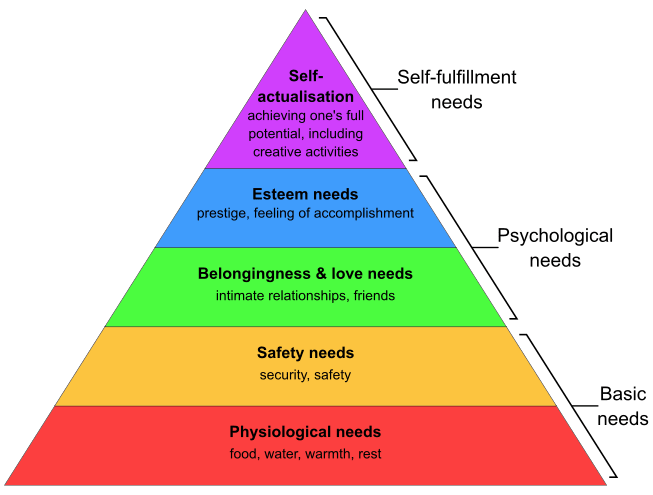
Brands are ultimately ideas. When association with the brand causes positive feelings and inspires people to talk about it to other people, it has an accumulating effect on the brand. Abraham Maslow’s Hierarchy of Needs suggests that memorable brands help consumers to feel safe, appreciated, accomplished, and self-assured.
What’s the takeaway? If you’re wondering if your brand is memorable, ask your customers and prospects whether they talk about it to other people. And notice if they do that when they’re unprompted. If they’re not talking about you yet, keep removing words and simplifying the idea until you reach something they can talk about to their friends and recommend the value you deliver.