Open up your favorite app these days, and it feels a bit like the meme below. Use AI to improve your writing. AI can give you ideas to get started. AI will solve all of your problems!
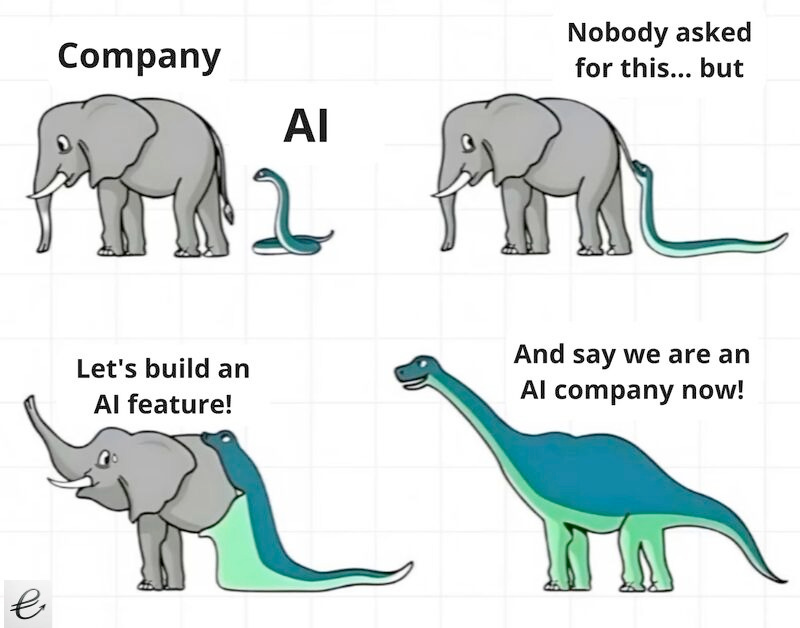
AI feature creep is real, and it doesn’t feel organic. It feels like a technology in search of a problem. The “AI” part of the feature seems more important than actually solving the feature need.
What would it look like to take a more holistic approach?
Balancing paving cowpaths and building new roads
In a perfect world, AI features would enable new capabilities that were not possible before. These features would also remove the need for unnecessary work, and deliver both productivity and tangible benefits to the software user.
Because these outcomes are potentially so different from how we engage with software today, we lean on current metaphors. We’re not sure about the interfaces, triggers for actions, inputs, and outputs for the future. The result? We stick with the “cowpaths” that are well trodden already.
At a certain point, that means moving away from existing software design while keeping the same design principles:
-
Simplicity: keep features as simple as possible, but no simpler
-
Functionality: do what’s promised and avoid anti-patterns
-
Beauty: make features pleasing to use and review
-
Consistency: each feature uses a familiar design language
When you consider adding AI features to existing software, how do you know where to focus? Start with making those systems open to change.
Pietro La Torre describes how to spot “Legacy Systems” this way:
here’s how to spot neo-legacy solutions:
High cost for simple changes
Complex and expensive integration with other systems
Struggle with data extraction and accessibility
Building new software that takes advantage of AI is the inverse of those legacy systems:
-
Change needs to be fluid, constant, and inexpensive
-
Integration is built in and easy
-
Data Models are defined and interoperable with other systems
One feature at a time…
This is all pretty abstract, and it’s easier to consider with an example. Take Google’s search page, which is vastly different than it was back in the days of a single search bar.
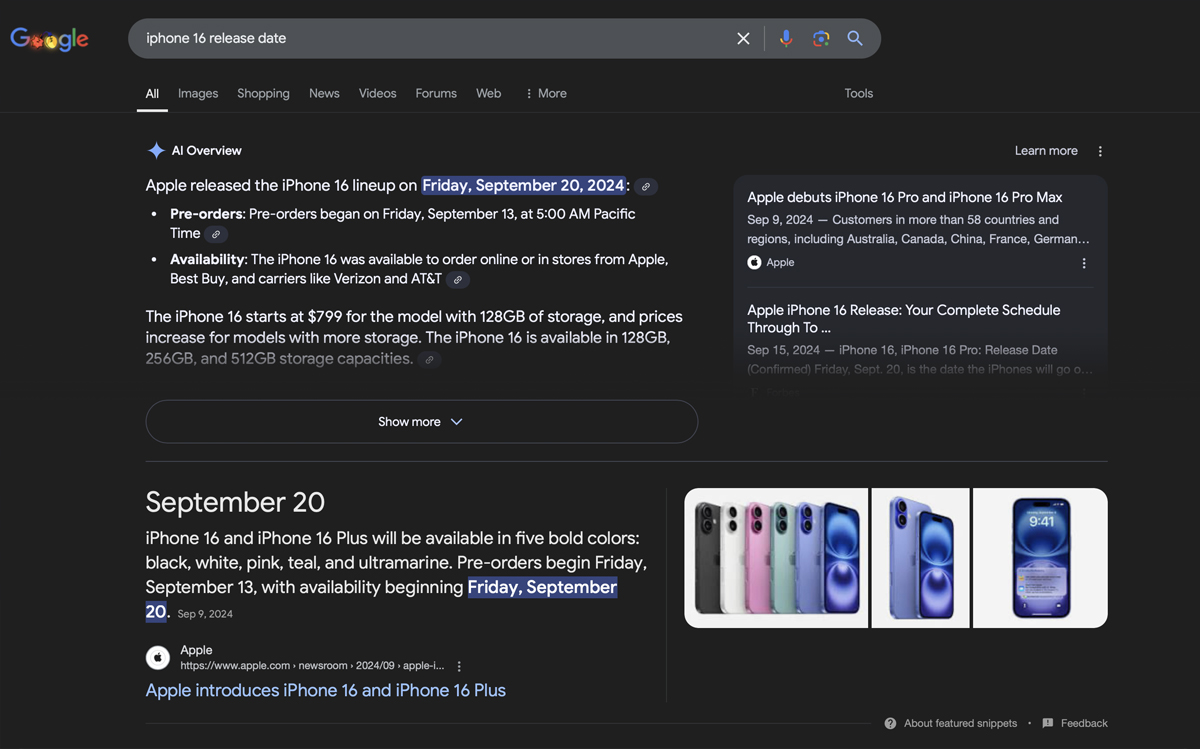
What do you see? I see a variety of results and not enough visual clues to know which results are “good”, “ad-supported”, “Ai-driven”, or even which ones would work best for me.
Chuck Nelson compares OpenAI’s search to Google’s by demonstrating its simplicity: “The visual clutter is not there because it’s a conversation, not a list. It’s one answer instead of 10.” There are a lot of factors driving the way that the Google search looks like today (and probably a lot of product teams), and not many of them are focused on the customer.
The customer wants … to get a good answer when they search. Broadly speaking, they don’t care how it happens, as long as it’s a good result.
An AI-driven version of that search might be fine, but it needs to feel like the kind of search result you expect. In OpenAI’s version, it’s the result of a conversation with a bot instead of an exhaustive list of results. Notice we don’t deliver a list of categories or open lots of windows with results – neither of those patterns match what people expect when they “use a search engine”.
Making that experience better has to have more substance than presenting the results as a pirate limerick (which OpenAI will happily do if you ask it to use that format.
A differentiated search experience powered by AI might look like giving you additional context for:
-
why that link was picked for you
-
how you can learn more
-
whether this search result was customized for you or similar to the result others would receive
Keep the customer as the end in mind
And that’s the message to keep in mind for AI-driven features.
They work when they deliver benefits for the customer that align with what the customer wanted to do. AI features for the sake of AI don’t make sense because adding technology often adds clutter instead of delivering value.
In the OpenAI vs. Google Search example, the customer wins … but only if the answers are also correct, reliable, expected, and understandable. When the technology (AI) simplifies the task and still provides a delightful experience, that’s the right amount of AI to add to your product.
Seeing a ✨ delivers a sparkle because it’s still relatively new. Unless features enhanced by AI also deliver better value and less complexity,
What’s the takeaway? When you’re asking how much AI you should infuse into your product, the answer shouldn’t be a measure of AI. The right question: does it get the job done in an expected way for the customer and deliver delight?